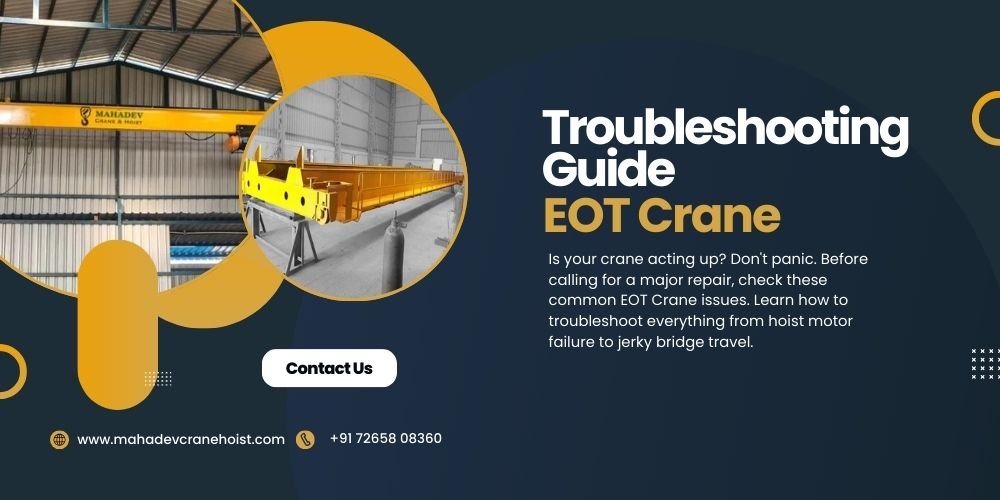
In a fast-paced production environment, a crane that won’t move is a production line that has stopped. While major structural repairs require a certified technician, many common issues with EOT Cranes are related to simple electrical faults, sensor errors, or lack of basic maintenance.
Here is how you can perform a preliminary check before your maintenance team calls for outside assistance.
1. The Hoist Won't Lift (Or Lowers Slowly)
If the Wire Rope Hoist motor is humming but not moving, or failing to lift altogether, check these:
-
Overload Relay: Check if the overload relay has tripped. This often happens if the load is too heavy or if the duty cycle has been exceeded.
-
Brake Adjustment: A stuck brake will prevent the hoist from lifting. Check if the brake release mechanism is functioning properly.
-
Voltage Fluctuation: Low input voltage is a common cause for weak lifting capacity in hoists.
2. The Crane is "Jerky" or Sways Excessively
Smooth operation is critical for safety. Jerky movement usually points to mechanical alignment issues:
-
Wheel Alignment: If the crane wheels are misaligned, they will “bind” against the runway rail, causing jerky travel.
-
Drive Motor Speed: If your crane uses a Variable Frequency Drive (VFD), check the acceleration and deceleration settings. If the start is too aggressive, the load will sway excessively.
-
Rail Obstructions: Ensure the runway rails are free of debris, grease, or uneven joints.
3. The Pendent Control Is Not Responding
This is often a simple electrical contact issue:
-
Emergency Stop: It sounds obvious, but ensure the E-Stop button isn’t accidentally locked in the “pressed” position.
-
Control Cable: Check for “kinks” or breaks in the pendant cable, especially at the entry point to the control box.
-
Contactor Issues: If you hear a “chattering” sound when pushing buttons, your electrical contactors may be worn out and in need of replacement.
4. Excessive Noise during Travel
-
Gearbox Oil: Lack of lubrication leads to metal-on-metal grinding. Check the oil levels in your bridge and hoist gearboxes immediately.
-
Worn Bearings: A rhythmic “thumping” or “screeching” sound usually indicates that a wheel or motor bearing has reached the end of its lifespan.
When to Call the Professionals at Mahadev Crane Hoist
If your troubleshooting indicates a fault in the internal motor windings, a structural weld crack, or a failure in the main power collector system, do not attempt DIY repairs. These require specialized tools and strict adherence to electrical safety standards.
As a leading manufacturer and exporter, Mahadev Crane Hoist supplies authentic spare parts—from wire ropes and rope guides to motors and VFD units—specifically calibrated for our equipment.