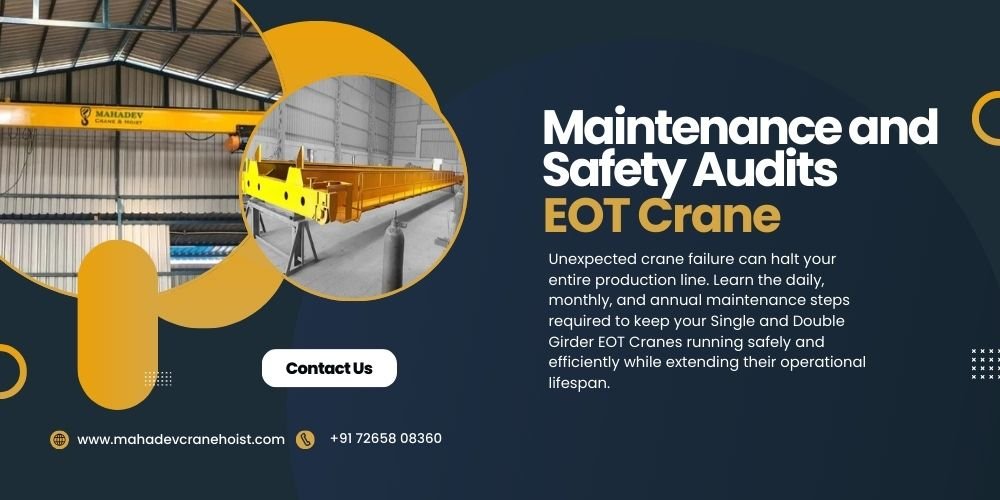
In a high-capacity manufacturing plant, a crane isn’t just a piece of equipment—it’s a lifeline. Whether you are operating a Single Girder EOT Crane for light assembly or a Double Girder Goliath Crane for heavy fabrication, regular maintenance is the only way to ensure both productivity and personnel safety.
Neglecting maintenance doesn’t just lead to broken parts; it leads to “hidden costs” like production delays, emergency repair premiums, and, most importantly, workplace hazards.
The Three Pillars of Crane Maintenance
A successful maintenance program is divided into three distinct phases:
1. Daily Pre-Operational Checks (The Operator’s Responsibility) Before starting the shift, the operator should perform a visual “walk-around”:
-
Wire Rope: Look for kinks, broken strands, or “bird-caging.”
-
Controls: Ensure the pendant or remote control buttons are responsive and not sticking.
-
Limit Switches: Briefly test the upper limit switch to ensure the Wire Rope Hoist stops before hitting the drum.
-
Audible Alarms: Confirm that warning sirens or lights are functional.
2. Monthly Periodic Inspections (The Maintenance Team) This is a more technical deep-dive into the mechanical health of the system:
-
Lubrication: Check oil levels in the bridge and hoist gearboxes. Ensure the wire rope is adequately lubricated to reduce internal friction.
-
Brake Adjustment: Inspect the electromagnetic or hydraulic brakes for wear and tear. A “drifting” load is a sign that brakes need immediate adjustment.
-
Fasteners: Check for loose bolts on the end carriages and bridge girders caused by operational vibrations.
3. Annual Structural & Electrical Audit (The Expert Review) Once a year, a qualified engineer should conduct a comprehensive audit:
-
Structural Integrity: Inspect the welds on the girders for stress cracks.
-
Electrical Panel: Clean the contactors and check for loose wiring or carbon buildup that could cause short circuits.
-
Wheel Alignment: Check the “long travel” wheels for uneven wear, which could indicate that the crane is not running square on the gantry rails.
Common Signs Your Crane Needs Professional Repair
If you notice any of the following, it is time to call in a specialist manufacturer:
-
Grinding Noises: Often indicates a lack of lubrication or a failing bearing in the hoist or motor.
-
Excessive Load Sway: This could be a sign of uneven motor speeds or worn-out wheels.
-
Slow Response: If the hoist takes longer than usual to lift a rated load, the motor or gearbox may be losing efficiency.
Safety First: The Mahadev Commitment
At Mahadev Crane Hoist, we don’t just manufacture and supply; we partner with you to ensure your equipment stays in peak condition. Our cranes are designed with high-quality, standardized components, making it easier to source spare parts and perform routine servicing.
We recommend maintaining a “Crane Log Book” for every piece of equipment on your floor. This not only keeps you compliant with industrial safety regulations but also increases the resale value of your machinery.
Is your crane due for a safety audit?
Avoid unexpected breakdowns by scheduling a professional inspection with the experts at Mahadev Crane Hoist. Contact us today for a maintenance consultation!